The Processional Down the Aisle
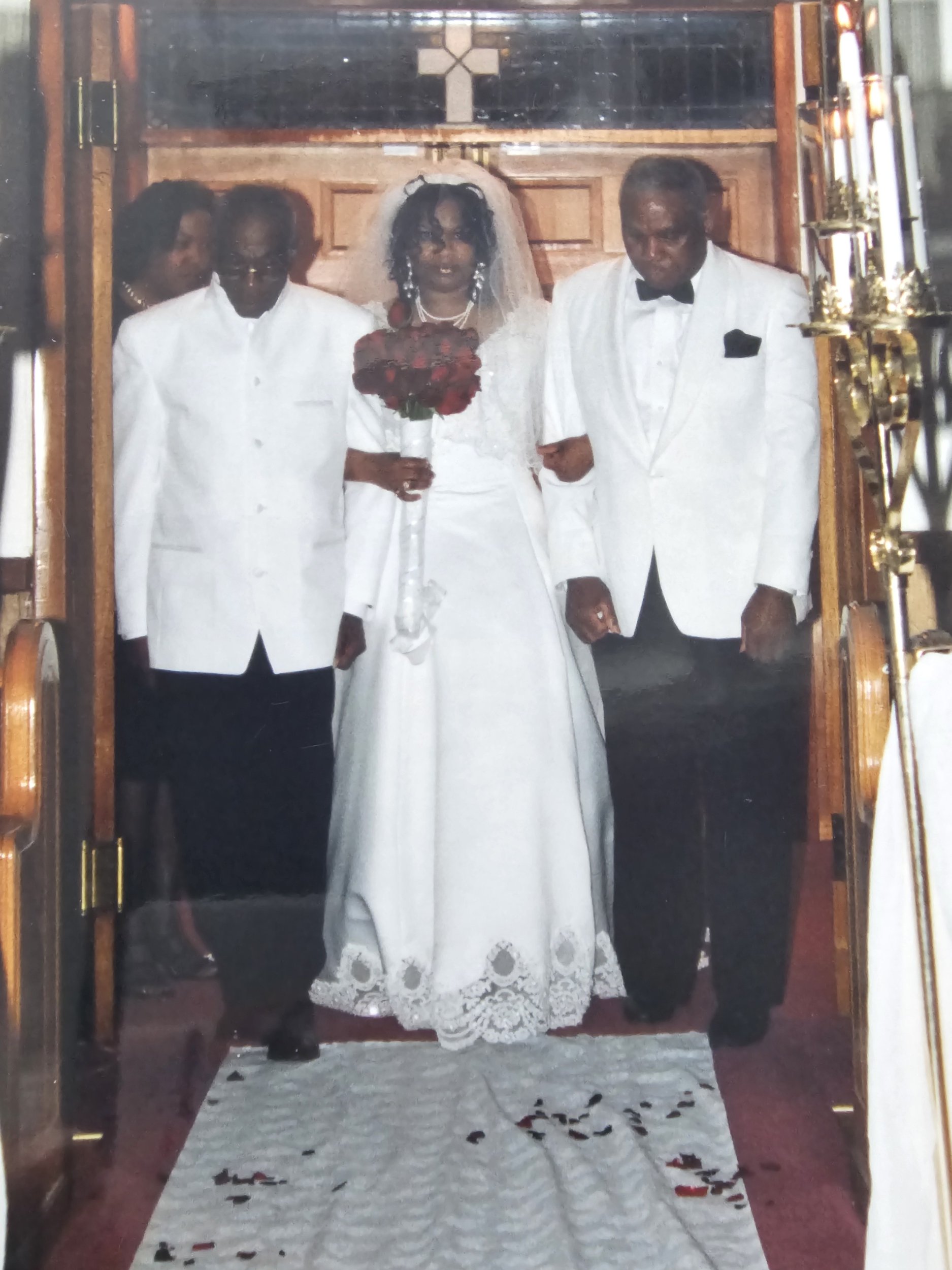
Real talk family. As we continue our series to better understand the wedding ceremony traditions that lead us into covenant marriage, we look at the aisle as an important component to begin the covenant journey. Some of us consider the aisle as a perfectly straight path for the bride to walk from one end of the room to the other. Truth is that marriage rarely works that way. In marriage, there will be detours, unexpected stops, and even changes in direction. There are times during our journey when one spouse has to carry more. There will be blind spots and dark roads when you don't know exactly what comes next. That's why covenant matters. You don't need to know every turn in the road to commit to walking it together.
In many ceremonies, the bride is accompanied by family members or community members as she moved toward her groom. The most familiar Western tradition is the bride walking down the aisle with her father. This orgin is actually tied more to arranged marriages during a time where marriages were also business transactions. As sexism was rooted out and women’s rights, identity, and choice became more the norm, a father walking his daughter down the aisle is more symbolic of the bride separating from her mother and father to become one with her new husband. The father’s role also represented a show of support from the bride’s family. So while this tradition started as patriarchal, todays couples have redefined its meaning and purpose turning it into something much more empowering and meaningful.
Wedding Fact
Couples are increasingly choosing a processional that reflects their own families, faith, personalities, and understanding of marriage. Some couples walk in together. Some walk alone. Some are accompanied by both parents. Some include children, especially if the couple is a blended family. That flexibility gives us an opportunity to focus less on the mechanics of the walk and more on what the covenant represents.There is no single processional that makes a marriage stronger.
Reflection Tip
Before the wedding, sit down together and create a simple "Marriage Road Map." Write down three things you want to protect, three things you want to build, and three things you want to experience together during your first years of marriage. For seasoned couples, marriage requires periodically checking the map. Check in with one another to ask “Are we still headed in the same direction?”.
Prayer
Heavenly Father, Thank You for the journey that brought us to one another and for the covenant that allows us to walk through life together. Help us remember that marriage isn't simply about reaching the altar. It is about faithfully walking together after we leave it. Give us patience when the road becomes difficult, humility when we disagree, courage when we face uncertainty, and compassion when one of us needs to walk a little slower. Help us remain connected when life becomes busy.
Help us choose partnership over competition, understanding over assumptions, and love over selfishness. When we don't know where the road is leading, remind us to trust You. Guide our steps, strengthen our covenant, and help us become the couple You have called us to be. In the name of Jesus, Amen.
Promise To Love
Real talk family. Traditional wedding vows are beautiful but most of the familiar wedding vow language ("for better, for worse," "for richer, for poorer," etc.) is not quoted directly from Scripture. Traditional vows were developed over centuries by the Church to summarize biblical principles of covenant marriage. In fact, before wedding ceremonies, wedding bands, and traditional vows, Scripture gave couples a blueprint for what covenant love should look like.
A good example of a marital Foundational Biblical Principle (FBP) is Genesis 2:24 (NIV) "That is why a man leaves his father and mother and is united to his wife, and they become one flesh." This is a promise to leave and cleave. It places the marital relationship as of greater priority than the relationship between parent in child(ren). Don’t misunderstand. There is great responsibility in becoming a parent. But as an adult, when you marry, you build a new family identity with your spouse. This vow is about prioritizing one another above all else, second to God alone. Because we’ve worked with many couples, we can attest that unhealthy boundaries or out-of-order relationships leads to great dysfunction and unnecessary marital strain.
Other biblical guidance for couples include Ephesians 5:25 (NIV) "Husbands, love your wives, just as Christ loved the church and gave himself up for her." This is one of my favorites and is relevant to both spouses. This guidance ensures that personal selfishness does not lead to any marital mistreatment but totally opposite of that. This promise is sacrificial love. This guidance also includes acts of service, generous giving, and unconditional love. In my opinion, all the other vows can hang on this one scripture along - or better, for worse," "for richer, for poorer,” “in sickness, in health”, everything you say from traditional vows or vows you write for yourself.
And let’s not forget Romans 12:10 (NIV) "Be devoted to one another in love. Honor one another above yourselves." Honor influences so many aspects of our marriages including communication, conflict resolution, affection, and relationship behaviors. Many marriages didn’t end because love faded away but more because honor disappeared. Remember, love cannot be a fleeting emotion. You must choose to love, remain committed, and honor your vows (did you see my wordplay there?).
God’s Word is true, pure, and complete. Scripture even gave a roadmap for intimacy when we consider Hebrews 13:4 (NIV) "Marriage should be honored by all, and the marriage bed kept pure..." I personally feel this is a promise to protect our covenant emotionally, spiritually, physically, and sexually. It includes protecting ourselves and guarding our marriages. Faithfulness is more than just avoiding physical infidelity. It also represents emotional loyalty and connection.
And while there are many others to explore on your own, I’ll close with Colossians 3:13 (NIV) "Bear with each other and forgive one another..." Forgiveness protects the covenant from bitterness. Remember that there is only one who is perfect. His name is Jesus (not whatever your spouse is named!). We must practice grace, and forgiveness, first with our spouses, then everyone else. God’s Word teaches us that we all will experience trouble. Life is full of trouble. Marriages will experience trouble. But be encouraged. Christ overcame the world. We are overcomers too. Consider for a moment what God’s forgiveness has done for you. It redeemed you. Put you back in covenant with God. It released you from living in condemnation. It met you in your dirt and made you white as snow. No record or scorekeeping, just love. Do you see where I’m going with this. Think how much true forgiveness could change your marriage.
There is so much more. Search the scriptures. Don’t settle for just traditional vows. Again, there is so much more. I’ll leave you with this - Ecclesiastes 4:12 (NIV) "A cord of three strands is not quickly broken." Keep God in your marriage and take each day as a new opportunity to glorify HIM with your covenant. Love and blessings, j&c
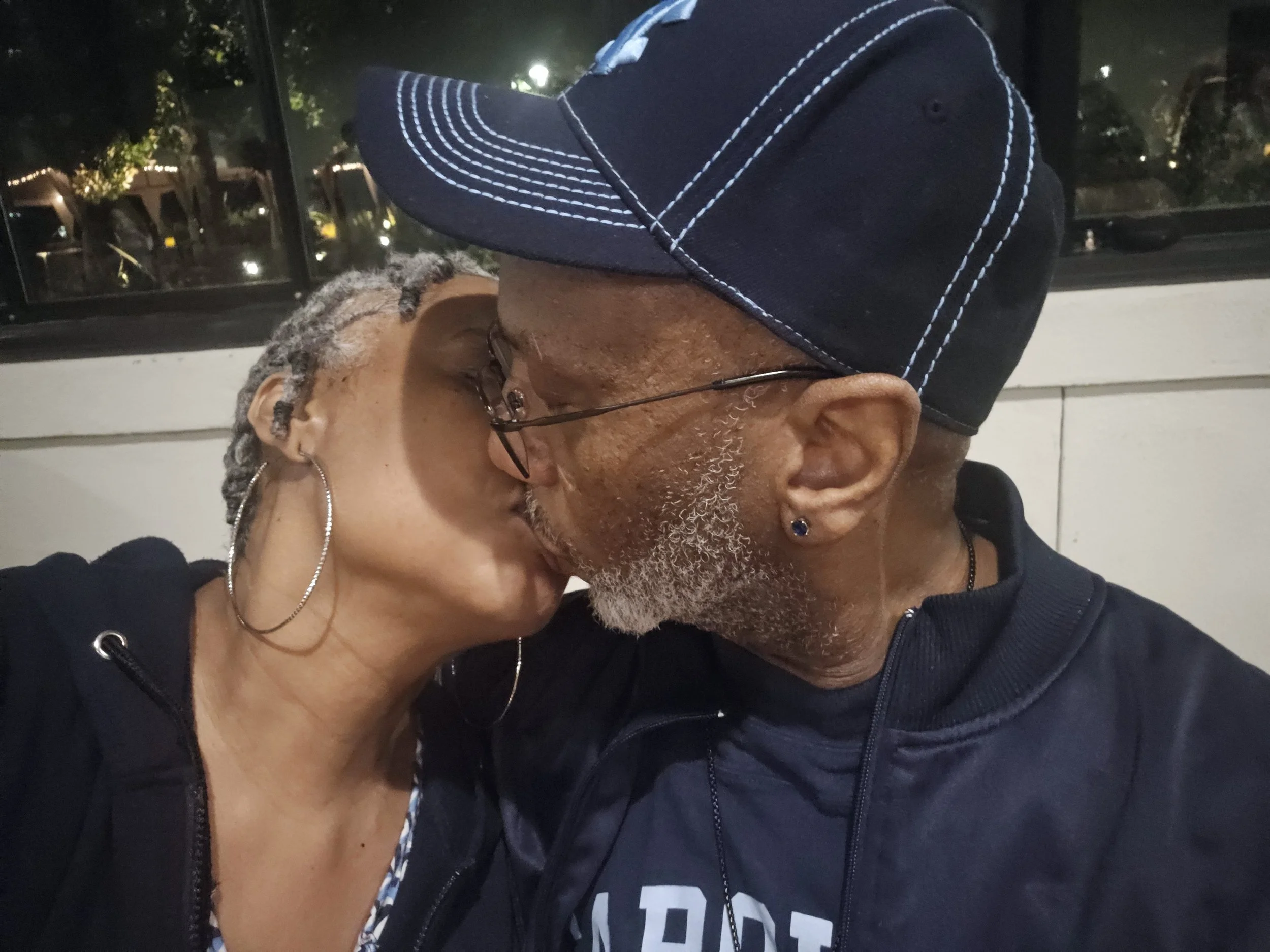
Does passion sustain itself alone?
I hope you missed me delivering my weekly blog. I was without my laptop mid-March and just decided it was too much to update this blog via phone (I’m still very old school). But I’m back. I'm excited about April blogs. We have a lot of good things to share. Let’s start this off talking a little more about passion in marriage. To have passion, chemistry must exist, right? Wrong.
Chemistry is magnetic. It pulls you in without effort. But what many couples eventually discover is that while chemistry is instant, presence, connection, and partnership is built over time. Partnership steadies love. This kind of steady love is lasting because it’s achieved through time spent building something special together. This kind of love includes patience with each other’s differences and most importantly, being fully present in the process. One of the things you will appreciate most about intentional presence is how passion matures as a result of it. Yes, passion.
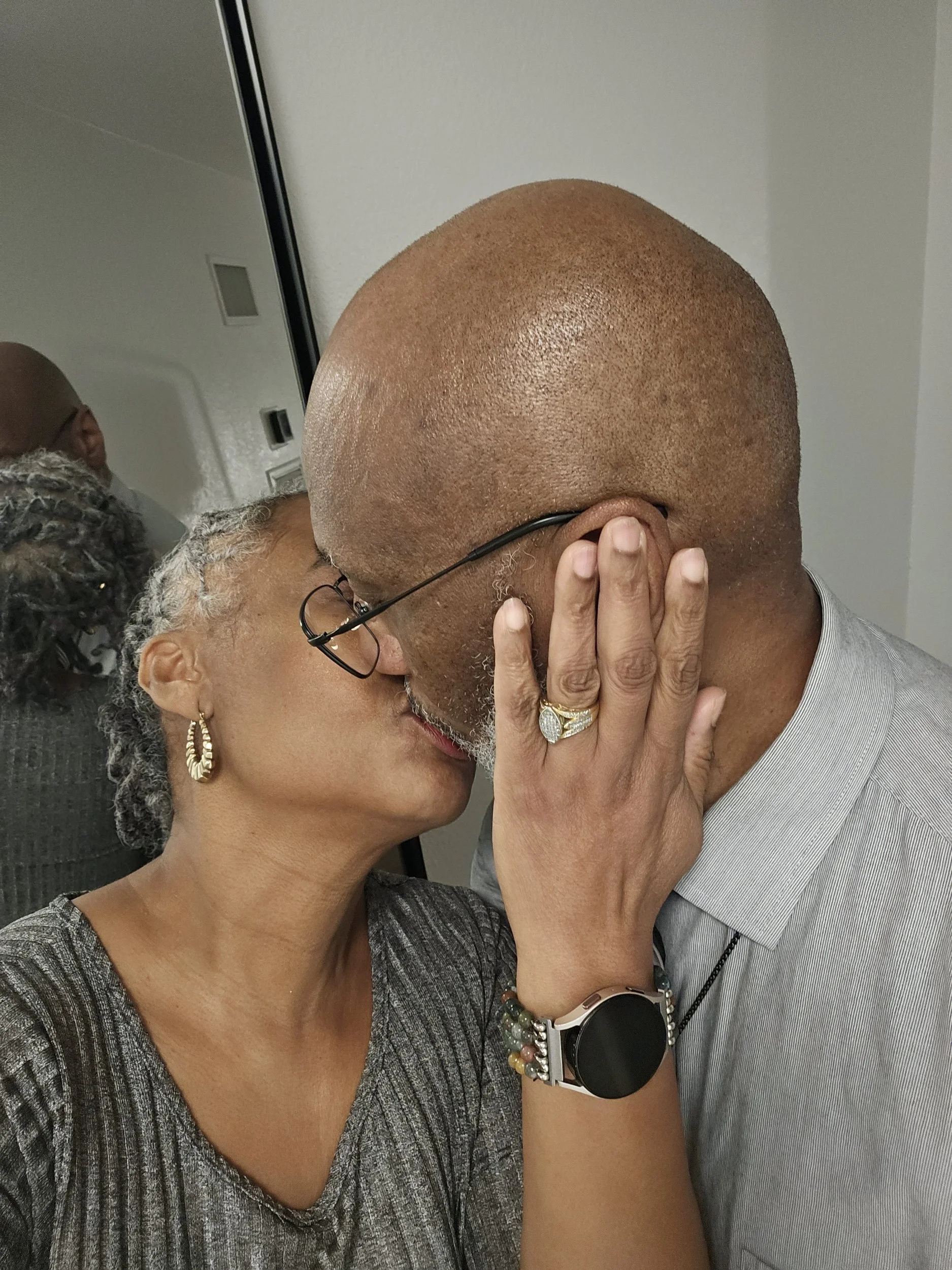
While James and I had the natural passion that exists with good chemistry, we also experienced the deep passion that grows, lasts, and isn’t always rushed, but expected to be savored over a lifetime. A relationship full of passion is one of the greatest benefits of marriage. While sex is not the only consideration when you have a passionate relationship, your intimacy is so much better when you can guiltlessly satisfy the burn Paul talks about in I Corinthians 7.9 within covenant marriage. Real talk couples, really think about this. As your marriage becomes stronger, your love and passion become stronger as well. Imagine how great your passion is as you grow together over the years. Nothing we have sustains itself so don’t be confused about your role in the process. Every area of your marriage requires being intentional.
Reflection:
Work on a shared goal this week then pause and celebrate it together, fully present, with time, and permission to passionately show up for one another.
Also ask yourself: Are we giving your love time to grow or expecting it to sustain itself?
Prayer:
God, help us build a partnership rooted in patience and presence, where our love and passion can grow over time. Amen.