The Wedding Veil
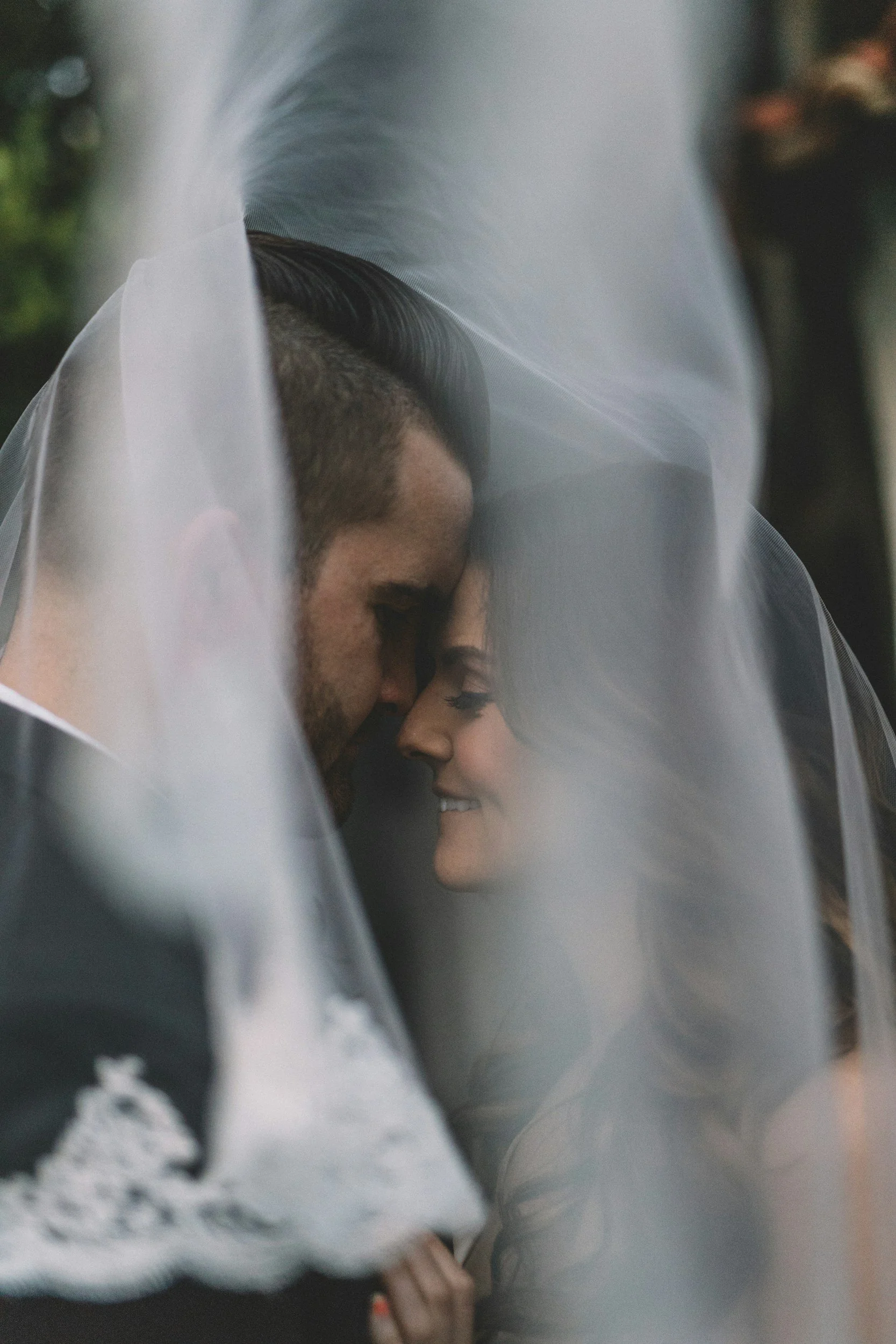
Real talk family. There is something breathtaking about the moment a bride appears at the beginning of the aisle with her face softly covered by a veil. Then comes the moment in the ceremony when the veil is lifted and suddenly, the bride’s face is revealed. This simple tradition easily represents marriage in many ways. Marriage is a lifetime of revealing, discovering, and cherishing one another. Let's explore the history of the veil and then consider what this tradition can teach us about covenant love.
The veil is one of the oldest recognizable wedding traditions. Its traditional meaning changes across cultures and centuries rather than having one universal meaning. Like the herb bouquet in Greece and Rome, the veil was associated with ancient protective beliefs. Then, over time, veiling became associated with modesty, respectability, and marriage in different cultures. The tradition eventually evolved into the beautiful white or ivory veil many Western brides wear on their wedding day today, again popularized by Queen Victoria's 1840 wedding.
I believe that one of the most beautiful ways to view the veil today is through the idea of revelation. Before marriage, there are still things two people don't know about one another. You know the stories you've been told. You know the personality you've experienced and the person you’ve come to love. You know the dreams, accomplishments, hopes, and even some of the disappointments. But days following the ceremony, you begin to experience something deeper. And over time, you discover one another. Revelations occur, truths are revealed, and more is eventually shared than hidden. When the marriage is healthy, you don't run from what you discover. You learn to love the whole person. That is covenant.
One of the greatest gifts James gave me was allowing me to be completely myself in his presence. Even before we became a couple, I could tell him things I wasn't necessarily proud of. I shared painful experiences and revealed parts of myself that I thought was unworthy of love. But James didn't look at those things through judgment. He listened. He knew me and then he chose me. When he eventually told me he loved me, one of the things that overwhelmed me was knowing that he wasn't loving an edited version of me.
I believe that one of the greatest gifts marriage can offer us is the opportunity to be fully known and still deeply cherished.
Today, some brides choose to walk with the veil covering their face and have it lifted during the ceremony. Others wear it behind their head without covering their face. Some don't wear one at all. And that's okay. Wedding symbolism doesn't have to depend upon following one particular tradition. I hope you will use this article about the veil as a reminder to keep discovering one another, stay interested to keep listening, learning, and lifting the veil. The spouse you married will not be the same person you continue to encounter at other ages, stages, and phases of life. Marriage gives us the privilege of growing alongside someone as God continues to shape us.
Wedding Fact
Scripture does not prescribe a wedding veil as part of a Christian marriage ceremony. Veils have been used in wedding traditions across numerous cultures, but their meanings have not been universal.
Reflection Tip
Take a moment this week to ask what your spouse has discovered about you during your marriage. Also ask if there is something they wish you understood better about them. Don’t rush the conversation. Take time to listen carefully to one another for deeper revelations regardless of how much time you’ve been together.
Prayer
Thank You Father God for the gift of marriage and for the privilege of being truly known and loved. Teach us to create a marriage where we don't have to hide from one another. Give us the patience to listen, the humility to learn, and the grace to love what we discover. Help us cherish one another through every season of life. When we discover something difficult, give us compassion. When we discover something beautiful, give us gratitude. May our marriage become a safe place where both of us can grow, heal, laugh, dream, and become more of who You created us to be. Keep our covenant strong. Keep our hearts tender toward one another. In the name of Jesus, Amen.
Promise To Love
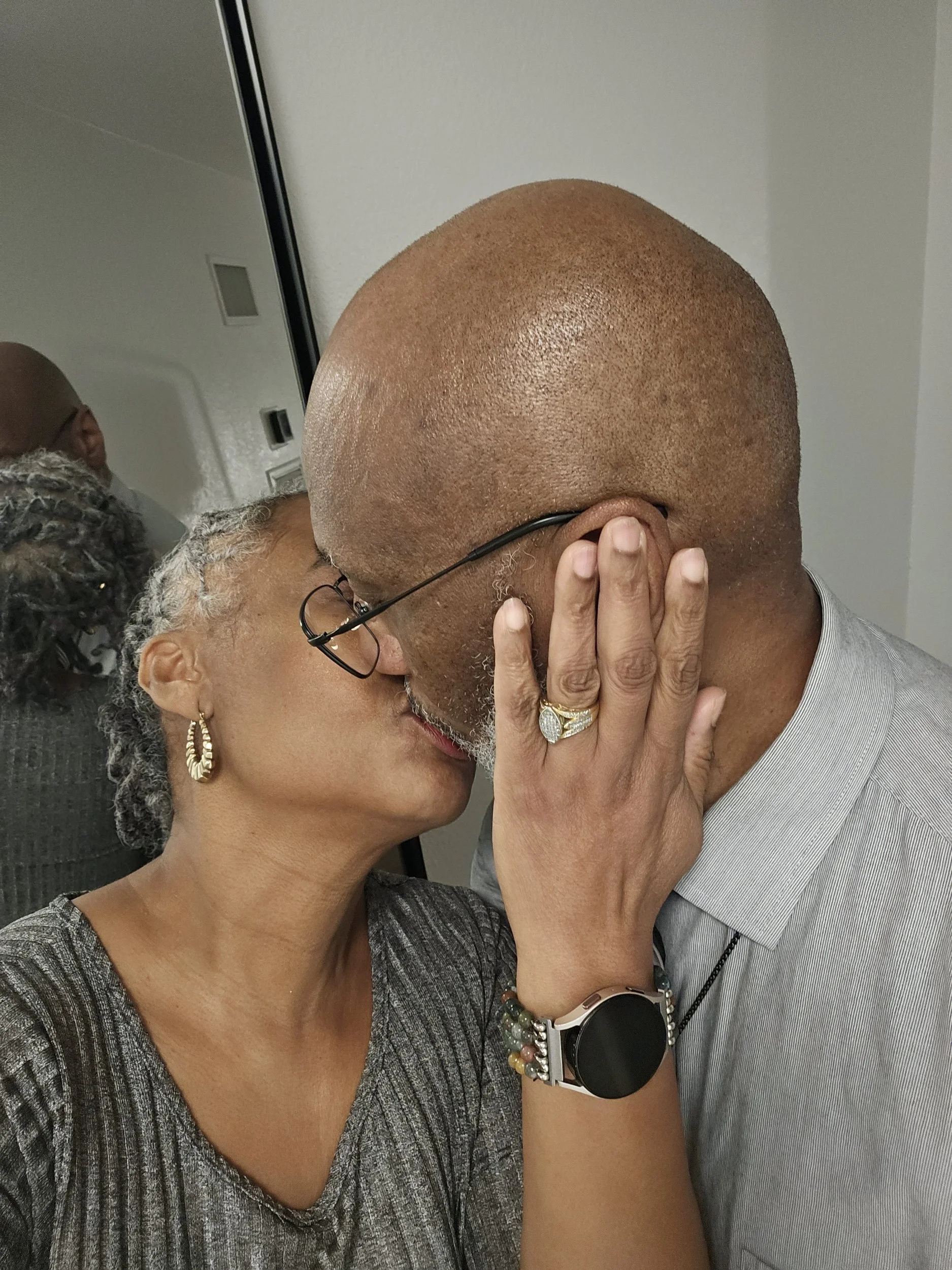
Real talk family. Traditional wedding vows are beautiful but most of the familiar wedding vow language ("for better, for worse," "for richer, for poorer," etc.) is not quoted directly from Scripture. Traditional vows were developed over centuries by the Church to summarize biblical principles of covenant marriage. In fact, before wedding ceremonies, wedding bands, and traditional vows, Scripture gave couples a blueprint for what covenant love should look like.
A good example of a marital Foundational Biblical Principle (FBP) is Genesis 2:24 (NIV) "That is why a man leaves his father and mother and is united to his wife, and they become one flesh." This is a promise to leave and cleave. It places the marital relationship as of greater priority than the relationship between parent in child(ren). Don’t misunderstand. There is great responsibility in becoming a parent. But as an adult, when you marry, you build a new family identity with your spouse. This vow is about prioritizing one another above all else, second to God alone. Because we’ve worked with many couples, we can attest that unhealthy boundaries or out-of-order relationships leads to great dysfunction and unnecessary marital strain.
Other biblical guidance for couples include Ephesians 5:25 (NIV) "Husbands, love your wives, just as Christ loved the church and gave himself up for her." This is one of my favorites and is relevant to both spouses. This guidance ensures that personal selfishness does not lead to any marital mistreatment but totally opposite of that. This promise is sacrificial love. This guidance also includes acts of service, generous giving, and unconditional love. In my opinion, all the other vows can hang on this one scripture along - or better, for worse," "for richer, for poorer,” “in sickness, in health”, everything you say from traditional vows or vows you write for yourself.
And let’s not forget Romans 12:10 (NIV) "Be devoted to one another in love. Honor one another above yourselves." Honor influences so many aspects of our marriages including communication, conflict resolution, affection, and relationship behaviors. Many marriages didn’t end because love faded away but more because honor disappeared. Remember, love cannot be a fleeting emotion. You must choose to love, remain committed, and honor your vows (did you see my wordplay there?).
God’s Word is true, pure, and complete. Scripture even gave a roadmap for intimacy when we consider Hebrews 13:4 (NIV) "Marriage should be honored by all, and the marriage bed kept pure..." I personally feel this is a promise to protect our covenant emotionally, spiritually, physically, and sexually. It includes protecting ourselves and guarding our marriages. Faithfulness is more than just avoiding physical infidelity. It also represents emotional loyalty and connection.
And while there are many others to explore on your own, I’ll close with Colossians 3:13 (NIV) "Bear with each other and forgive one another..." Forgiveness protects the covenant from bitterness. Remember that there is only one who is perfect. His name is Jesus (not whatever your spouse is named!). We must practice grace, and forgiveness, first with our spouses, then everyone else. God’s Word teaches us that we all will experience trouble. Life is full of trouble. Marriages will experience trouble. But be encouraged. Christ overcame the world. We are overcomers too. Consider for a moment what God’s forgiveness has done for you. It redeemed you. Put you back in covenant with God. It released you from living in condemnation. It met you in your dirt and made you white as snow. No record or scorekeeping, just love. Do you see where I’m going with this. Think how much true forgiveness could change your marriage.
There is so much more. Search the scriptures. Don’t settle for just traditional vows. Again, there is so much more. I’ll leave you with this - Ecclesiastes 4:12 (NIV) "A cord of three strands is not quickly broken." Keep God in your marriage and take each day as a new opportunity to glorify HIM with your covenant. Love and blessings, j&c

To Love and To Cherish Til Death Do Us Part
Real talk family. There are many sacred promises hidden inside our traditional wedding vows. One of the most emotional moments for me is when I hear the couple promise “To love and to cherish, till death do us part” Often times, these words indicate we are coming to the end of the ceremony. But not before couples solidify their covenant, for a lifetime, in front of witnesses.
The magitude of our vows normally causes guest to grow quiet. People smile through tears as everyone anticipates the beauty of forever. “To love and to cherish, till death do us part” are promises meant to shape how people live, love, forgive, connect, and remain faithful to one another in their marriage for a lifetime. These words actually are evidence that love was never meant to be casual. As shared in one of my previous blogs, love should not be treated like a feeling that comes and goes. Emotions are too fleeting for that. When emotions are high, love feels easy until life becomes stressful. In fact, some people begin questioning whether love still exists at all when relationships require patience, sacrifice, and growth.
Review all of your vows again. Our traditional vows teaches us that marriage is not sustained by attraction or emotion. Covenant love was never meant to be casual, temporary, or shallow. Our vows share a promise of permanence, security, intimacy, and lasting connection. In fact, research from The Gottman Institute consistently shows that stable commitment strengthens trust, communication, and long-term relationship satisfaction.
Pray with me. Our father. Help us to love each other deeply, intentionally, and faithfully. Help us never treat our marriage casually or neglect the gift of one another’s presence. Show us how to cherish our spouse with patience, kindness, affection, honor, and grace. Strengthen our commitment through every season and help our love reflect safety, joy, loyalty, and covenant. Help our marriage be a reflection of you. Amen.