

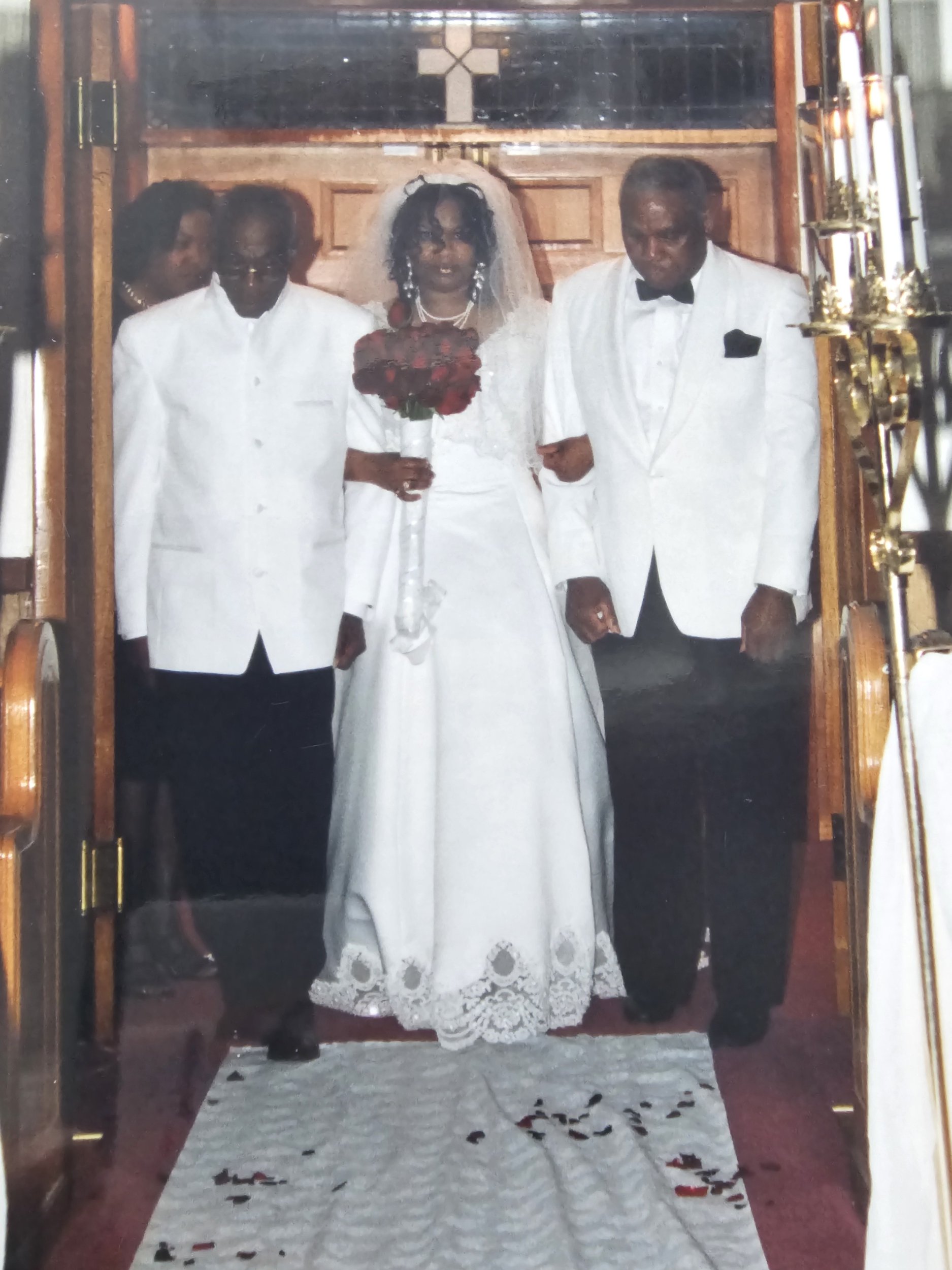
The Processional Down the Aisle
Real talk family. As we continue our series to better understand the wedding ceremony traditions that lead us into covenant marriage, we look at the aisle as an important component to begin the covenant journey. Some of us consider the aisle as a perfectly straight path for the bride to walk from one end of the room to the other. Truth is that marriage rarely works that way. In marriage, there will be detours, unexpected stops, and even changes in direction. There are times during our journey when one spouse has to carry more. There will be blind spots and dark roads when you don't know exactly what comes next. That's why covenant matters. You don't need to know every turn in the road to commit to walking it together.
In many ceremonies, the bride is accompanied by family members or community members as she moved toward her groom. The most familiar Western tradition is the bride walking down the aisle with her father. This orgin is actually tied more to arranged marriages during a time where marriages were also business transactions. As sexism was rooted out and women’s rights, identity, and choice became more the norm, a father walking his daughter down the aisle is more symbolic of the bride separating from her mother and father to become one with her new husband. The father’s role also represented a show of support from the bride’s family. So while this tradition started as patriarchal, todays couples have redefined its meaning and purpose turning it into something much more empowering and meaningful.
Wedding Fact
Couples are increasingly choosing a processional that reflects their own families, faith, personalities, and understanding of marriage. Some couples walk in together. Some walk alone. Some are accompanied by both parents. Some include children, especially if the couple is a blended family. That flexibility gives us an opportunity to focus less on the mechanics of the walk and more on what the covenant represents.There is no single processional that makes a marriage stronger.
Reflection Tip
Before the wedding, sit down together and create a simple "Marriage Road Map." Write down three things you want to protect, three things you want to build, and three things you want to experience together during your first years of marriage. For seasoned couples, marriage requires periodically checking the map. Check in with one another to ask “Are we still headed in the same direction?”.
Prayer
Heavenly Father, Thank You for the journey that brought us to one another and for the covenant that allows us to walk through life together. Help us remember that marriage isn't simply about reaching the altar. It is about faithfully walking together after we leave it. Give us patience when the road becomes difficult, humility when we disagree, courage when we face uncertainty, and compassion when one of us needs to walk a little slower. Help us remain connected when life becomes busy.
Help us choose partnership over competition, understanding over assumptions, and love over selfishness. When we don't know where the road is leading, remind us to trust You. Guide our steps, strengthen our covenant, and help us become the couple You have called us to be. In the name of Jesus, Amen.
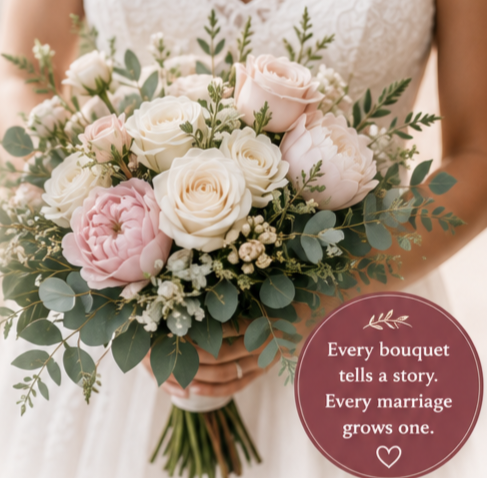
The Bridal Bouquet, A Symbol of Life, Hope, and the Marriage You Will Cultivate
"He has made everything beautiful in its time." — Ecclesiastes 3:11 (NIV)
Real talk family, I love flowers. I love the color, the smell, the versatility in shape, size, and color. I always enjoy the beauty flowers bring to wedding ceremonies. Traditionally, brides create a beautiful bouquet of flowers to walk down the aisle to her groom. The bridal bouquet is another one of the most recognizable symbols of a wedding ceremony. The bouquet should remind us how love grows, blossoms, and brings beauty to the lives of everyone it touches.
Interestingly, the earliest bridal bouquets looked very different from today's elegant floral arrangements. In places like Greece and Rome, brides often carried bundles of herbs such as garlic, rosemary, dill, and thyme. These fragrant plants were believed to represent protection, good health, and prosperity, while their strong scents were thought to ward off evil spirits. It was during the Middle Ages that flowers began to replace herbs, and bouquets became symbols of hope, happiness, and new beginnings. Today, many couples thoughtfully select flowers that reflect their personalities, family traditions, or even the story of how they met.
As Christians, let’s consider the bouquet as something even more meaningful than a beautiful floral arrangement. Consider the bouquet as a symbolic representation of love and marriage. Flowers begin as tiny seeds. They require sunlight, nourishment, patience, and care before they bloom into something beautiful. Marriage works the same way. Love does not blossom overnight. But once the seed is planted and nurtured, it grows. Trust grows. Friendship grows. Intimacy grows. Every healthy relationship flourishes because two people intentionally nurture it.
The bouquet reminds us that marriage is not something we admire from a distance but something we cultivate every day. One of the reasons I love this symbolism is because it feels so practical. A garden doesn't become beautiful by accident. Marriage is no different. Healthy relationships don't simply happen because two people fell in love. Marriages flourish because two people continue choosing one another through ordinary days, unexpected seasons, and changing circumstances. Some seasons feel like spring, full of excitement and new growth. Others feel like winter, when growth seems hidden beneath the surface. Remember, every season has purpose. With God's help, intentional care eventually produces beautiful fruit.
One of the things I appreciate most about wedding bouquets is that no two are exactly alike. Many bouquets reflect the personality of the bride carrying them. Like bouquets, no two marriages look exactly alike. Every couple has a different love story. Comparisons steal joy. And just as every bouquet has its own beauty, every marriage has its own unique design. Celebrate yours.
When I think back to our wedding day, I remember holding long-stemmed red roses as my bouquet. Our love didn’t begin on our wedding day. Love had been quietly growing through conversations, friendship, acceptance, and God's faithful work in our lives. God was healing places in my heart that only looked like dirt to me. But in all of my dirt, just like flowers, my beautiful love story was being cultivated and growing slowly, in friendship. And today, I thank God that He continues tending the garden of our marriage.
Engaged couples, as you choose the flowers you'll carry on your wedding day, remember that the bouquet will eventually fade but the love it symbolizes should continue to grow. For others, your wedding bouquet may be long gone, but your marriage still needs tending, daily nurturing. Healthy marriages are built through small, faithful acts repeated over time.
Wedding Fact
Roses remain the most popular wedding flower in the United States, symbolizing enduring love and devotion. Other favorites include peonies, hydrangeas, ranunculus, lilies, and eucalyptus. Many modern brides also include family heirlooms, handwritten notes, or meaningful charms tucked into their bouquet as a way of honoring loved ones and preserving family traditions.
Reflection Tip
If possible, place fresh flowers somewhere in your home this week. Every time you see them, let the flowers remind you should be intentional about nurturing your marriage to full bloom.
Prayer
Father, thank You for the beauty found in both creation and marriage. Just as You care for every flower in the field, help us faithfully care for the relationship You have entrusted to us. Teach us to cultivate love with patience, kindness, grace, and intentionality. May our marriage continue to grow through every season, bearing fruit that reflects Your faithfulness and brings hope to others. In Jesus’ name, Amen.
More Than Beautiful Clothing
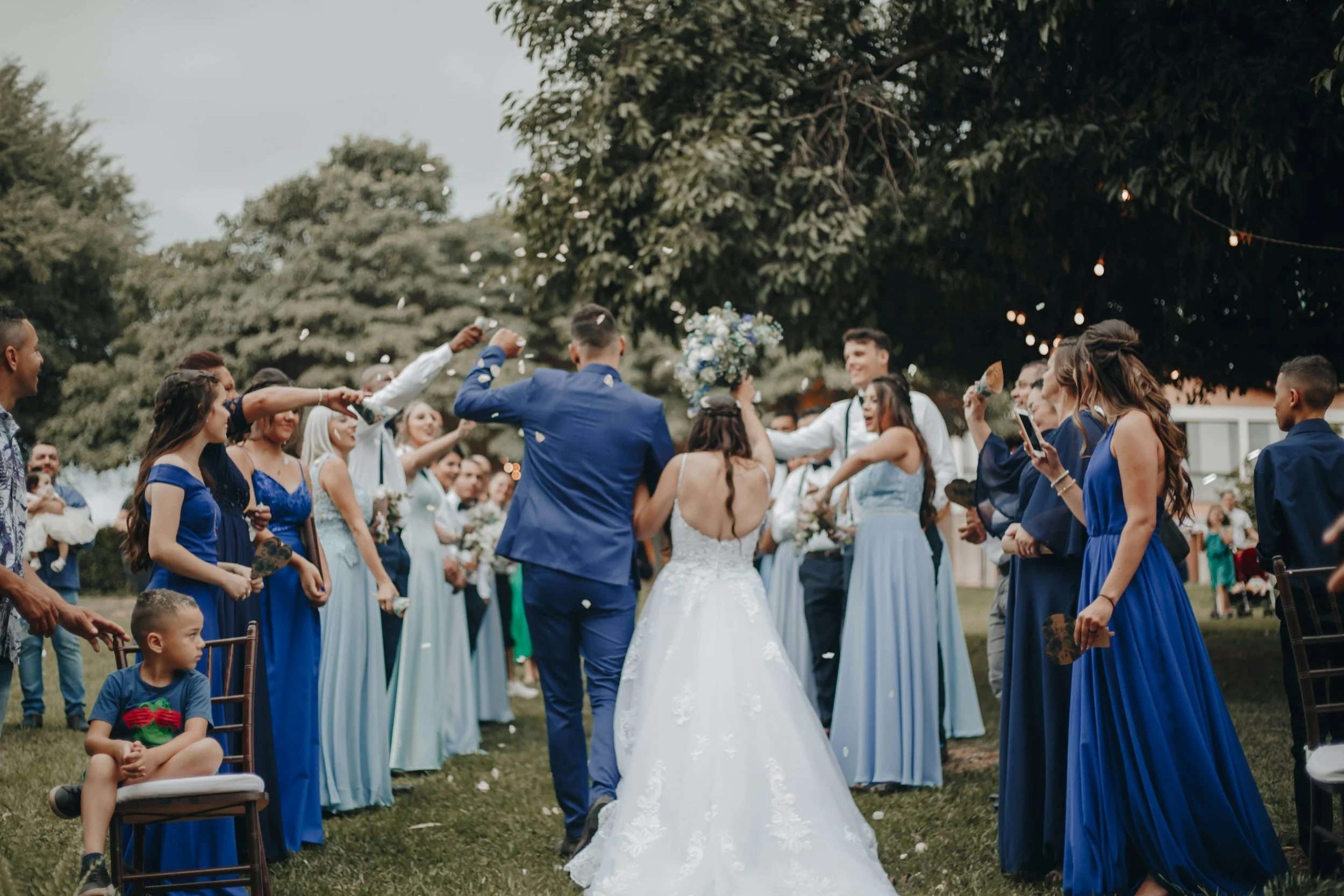
Real talk family, I believe one of the most significant things guests notice on a wedding day is the ceremony’s attire, especially the wedding dress. The room often stands still as the bride walks down the aisle in a beautiful gown while the groom waits in anticipation, dressed in his finest attire. Beside them stand bridesmaids and groomsmen, carefully coordinated, each playing a role in one of life's most sacred celebrations.
These traditions are much more than fashion choices. The wedding attire, the dress selection, the color coordination, the groom’s tuxedo or suit, the full attire ensemble serve as visual reminders that marriage is a covenant worthy of preparation, honor, and celebration. And like many other wedding traditions, everything that occurs during the ceremony must be more about the marriage that follows than the one day of celebration. The wedding dress visually presents the bride for a new beginning with her groom.
Today, many brides choose white, ivory, champagne, or soft blush gowns. White gowns first became popular after Queen Victoria wore a white wedding gown for her marriage to Prince Albert in 1840. Over time, white became more than fashion. Some even associated the white dress with purity or virginity. I believe in a covenant ceremony, the bride’s white dress should serve as a reminder of how God offers each of us new life through His grace.
While much attention naturally focuses on the bride, the groom's attire carries important symbolism as well. A tuxedo, suit, or individual attire preference does not make a husband. But it represents intentional preparation. The groom is not arriving casually. He stands in front of guests to receive his bride to accept the responsibility of becoming one.
Another beautiful aspect of a traditional wedding ceremony is the presence of trusted family members and friends standing beside the bride and groom. Wedding attire represents unity while the tradition reminds us that marriage thrives within community. The wedding party, distinguished by color coordinated attire and designated wedding responsibilities support the couple during wedding planning, throughout the ceremony, and beyond because healthy marriages benefit from relationships with people who pray for us, encourage us, and celebrate us.
Looking back on our own wedding day, I remember seeing James waiting for me with such anticipation and joy. The beautiful attire, the carefully chosen colors, and the smiles of those standing beside us all made the day unforgettable. The promises we made that day are still very much alive. Every act of kindness, every conversation, every prayer together, and every decision to choose one another continues to "dress" our marriage in love.
Wedding Fact
Approximately 82 to 85% of brides in the United States still choose a white, ivory, cream, or champagne wedding gown. A growing number of modern weddings have embraced a wider variety of colors including pastels or something bold and moody.
Reflection Tip
Review one of your wedding photos this week. Remember how the occasion made you feel.
Prayer
Thank you Heavenly Father for the beautiful traditions that remind us of the sacredness of marriage. Help us remember that it is our daily choices that truly clothe our marriage. Teach us to wear compassion, kindness, humility, patience, and love as we honor the covenant we made before You and one another. May our lives reflect the beauty of a marriage centered on Christ. In Jesus' name, Amen.